

Hotel discounts for summer 2027 are being decided this autumn, and the rules are stricter than in any previous season. The percentage must be calculated from a real price applied for at least 30 days, and until 9 August 2027 every price increase for guests needs an economic justification. Here is how to launch early booking offers, promotions on your own website and deals on Booking.com without risking a penalty or giving away your margin.
Key takeaways
- A discount percentage is calculated from the lowest price at which you sold the same night’s stay during at least 30 days before the reduction (Art. 65(2) of the Bulgarian Consumer Protection Act).
- An announced price reduction lasts at least one working day and at most one month (Art. 66 of the same act).
- Until 9 August 2027, every price increase for consumers must be economically justified. The fine for a company is €10,000 to €100,000 per violation (Art. 68n).
- When a new-season price has no 30-day history, the safest option is to advertise it as a price with a deadline, without a percentage.
- Since 14 November 2024, Booking.com cannot stop hotels in the EEA from offering a lower price on their own website.
Contents
- Which rules apply to hotel discounts in 2027?
- How is the “prior price” of a night’s stay calculated?
- Can a hotel raise its base rate and then offer a discount?
- How do you launch early booking offers without breaking the law?
- Which hotel offers are not a “price reduction” under the law?
- Can the price on your own website be lower than on Booking.com?
- How many more nights do you need for a discount to pay off?
- What are the most common mistakes with hotel discounts?
- What is the penalty for an incorrectly announced discount?
- What to do now
- Frequently asked questions
Which rules apply to hotel discounts in 2027?
Hotel discounts in Bulgaria are governed mainly by the Consumer Protection Act (CPA). Articles 63–66 set out how a price reduction is announced, Art. 68zh bans misleading practices such as fake urgency, and the temporary Art. 68n requires a justification for every price increase until 9 August 2027. The Consumer Protection Commission (CPC) applies these rules to services as well, including overnight stays.


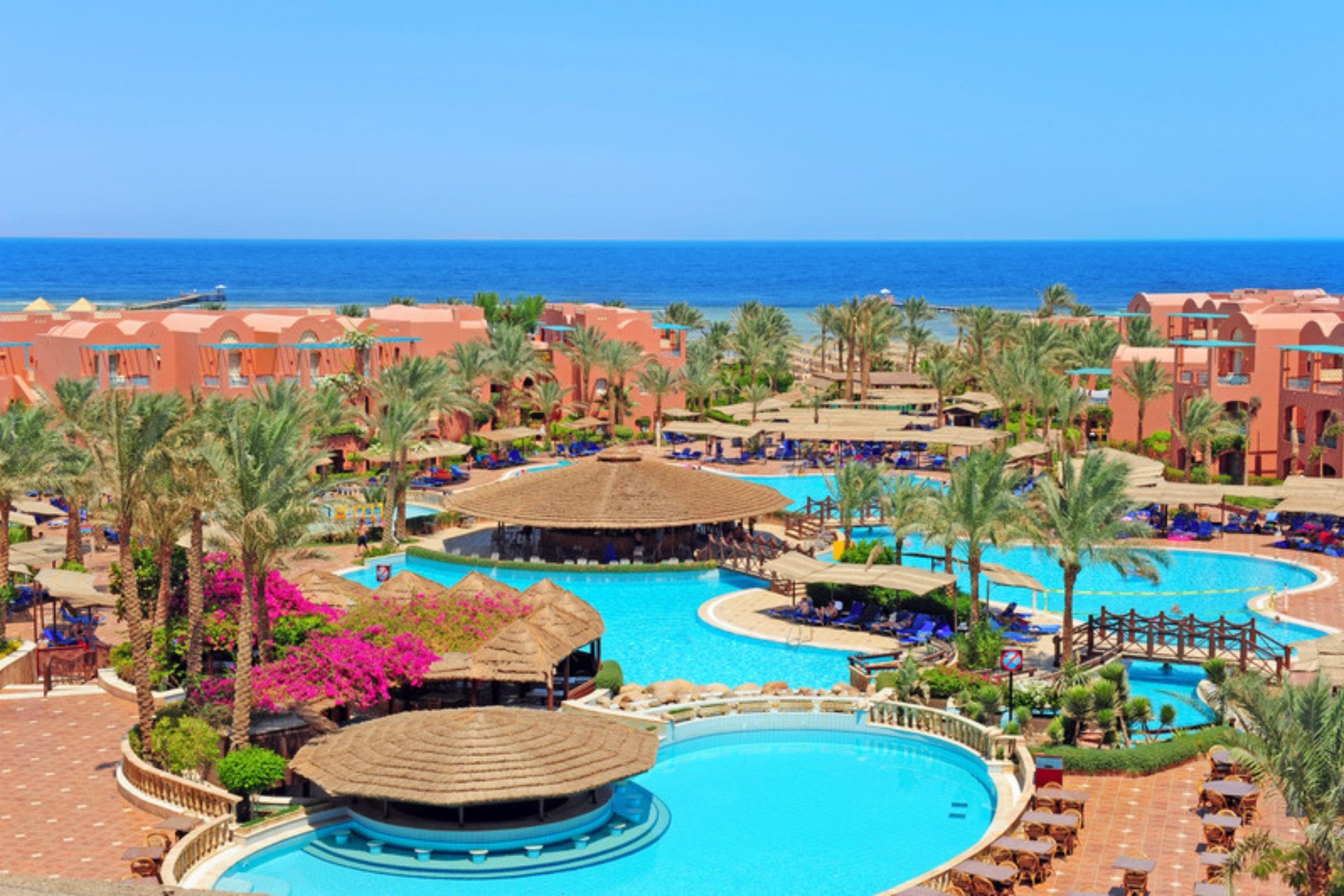
Directive 98/6/EC, where the 30-day rule comes from, covers only goods. Bulgarian law applies the rule to services too, so for a hotel in Bulgaria it applies in full.
| Rule | What it says | What it means for the hotel |
|---|---|---|
| Art. 63 CPA | A price reduction notice states the service, the conditions and the period. | State the room type, the stay dates and the deadline of the offer. |
| Art. 64 CPA | The reduction is shown with the prior price crossed out next to the new one, with the words “prior price” and “new price”, or with a percentage next to both prices. | “-20%” on its own, without both amounts, is not enough. |
| Art. 65(2) CPA | The prior price is the lowest price applied during at least 30 days before the reduction, in the same outlet, website or app. | The basis is the price you actually sold at, not a price that only sits in the rate sheet. |
| Art. 66 CPA | A reduction lasts from one working day to one month. | “Early booking -20% from November to March” cannot be a single reduction. |
| Art. 68zh CPA | A blacklist of commercial practices banned in all circumstances. | Write “last room” or “today only” only when it is true. |
| Art. 68n CPA (until 9 Aug 2027) | Price increases without an economic justification are banned. | The new 2027 rate needs a cost calculation. |
| Tourism Act | Prices are announced at the same level for all tourists, without discrimination. | Do not link the price to a guest’s nationality or origin. |
How is the “prior price” of a night’s stay calculated?
The prior price is the lowest price at which you sold the same service during at least 30 days before the reduction starts, in the same channel: your website, the front desk or the app. For a hotel, the safest approach is to compare the same room type, the same board and the same stay dates, because nights in July and in October sell at different prices.
In September 2024, the Court of Justice of the European Union confirmed in case C-330/23 (Aldi Süd) that the percentage itself is calculated from this lowest price. It is not enough to mention it on the side while the discount is calculated from a higher amount.
Example with illustrative prices
Sea-view double room with breakfast, stay from 15 to 22 July 2027:
- From 1 to 24 November 2026 you sell it at €130 per night.
- From 25 to 30 November you run a short Black Friday campaign at €117.
- On 1 December you want to announce “-10%”.
The lowest price in the last 30 days is €117, not €130. A lawful “-10%” is €105.30 per night. If you advertise €117 as “-10% off €130”, the basis is wrong, even if €130 is still in the rate sheet.
Keep the price history from your property management system (PMS) or channel manager. In an inspection it is the quickest evidence.
Can a hotel raise its base rate and then offer a discount?
Yes, if the increase is economically justified and the new price has been applied for at least 30 days before the discount. Until 9 August 2027, Art. 68n of the CPA bans unjustified price increases for consumers, and in an inspection the hotel itself has to prove the reasons for every increase.
An increase is any rise in the final price compared with the price of the same service in a comparable previous period. It is justified when it is directly and proportionately linked to an objective factor:
- higher supply costs, for example food for the board;
- higher labour costs;
- more expensive energy, fuel or raw materials;
- changes in taxes and fees;
- exchange rates or other factors outside the hotel’s control.
On 14 October 2026, the Council of Ministers approved the methodology used to set the comparable period and assess whether an increase is justified. The fine for a company is €10,000 to €100,000, with a separate penalty for each service or property.
For summer 2027 this means two things. If a July 2027 night costs more than a July 2026 night, prepare the calculation now, while you set the rates. And do not inflate the base rate artificially to make the discount look bigger. That risks two violations at once: a misleading reduction and an unjustified increase.
How do you launch early booking offers without breaking the law?
The safest format is a price with a deadline and no percentage: “Rates for bookings made by 31 January 2027”, with a specific amount for the room and dates. You are not claiming that anything has been reduced, and you do not need a 30-day price history, which a new season usually does not have yet.
Step 1. Load the 2027 rates with a cost calculation
Write down which costs each rate is based on and how it differs from 2026. A one-page calculation and the invoices behind it are enough to start with.
Step 2. Use a percentage only with a real basis
A percentage makes sense when the rate has already been on sale for at least 30 days. Otherwise, advertise the amount and the date until which it is valid.
Step 3. Keep each reduction within one month
Split a campaign running from November to March into separate prices with deadlines, not one long “-20%”.
Step 4. Show the final price
The price includes VAT and all fees the guest must pay. The tourist tax is a fixed amount per night set by the municipality, so the safest option is to include it in the price or show the exact amount next to it.
Step 5. State the conditions next to the price
Deposit, free cancellation deadline, minimum stay, board. Art. 63 of the CPA requires the conditions and the period to be in the offer itself.
Step 6. Claim only what is true
“3 rooms left at this price” is lawful if it is true at that moment. A countdown timer that restarts every time the page is opened is false urgency from the Art. 68zh blacklist.
Which hotel offers are not a “price reduction” under the law?
Separate rates with different conditions, permanent loyalty programme discounts and personal offers to a specific guest are usually not an announced price reduction. The risk lies in the wording: once you write “-15%” against another price, the offer must meet all the rules on price reductions.
The CPC states that the rules do not apply to individual reductions. The table shows where the line runs for the most common hotel offers.
| Offer | Usually not a reduction when… | Becomes a reduction when… |
|---|---|---|
| Non-refundable rate | it is a separate rate with its own price and conditions | it is advertised as “-10% off the flexible rate” |
| 7-night package | it has a total price with no comparison to another one | it is “7 for 6” or “free night”: then the package must really cost as much as 6 nights at the actual price |
| Club member discount | it is a permanent part of a loyalty programme | it is “this weekend only -20% for all subscribers” |
| Personal code for a returning guest | it is sent personally to a specific person | it is posted on Facebook for everyone |
| Last-minute offer | it is a price for specific available dates | it is “-40%” without a price applied for 30 days |
Can the price on your own website be lower than on Booking.com?
Yes. Since 14 November 2024, Booking.com has not been allowed to stop hotels in the European Economic Area from setting different prices in other channels, including their own website. This follows from the Digital Markets Act (DMA), under which the European Commission designated Booking.com a “gatekeeper” in May 2024.
A direct booking discount is lawful, but the CPA applies to it as well. Art. 65(2) refers to the price in the same outlet, website or app, so “-5% when you book on our website” is calculated from the price on your website, not from the one on Booking.com. A clearer option is a separate direct booking rate or added value: breakfast, late check-out, parking.
How to bring guests to your own website with paid ads is covered in our article on the five questions to answer before a Meta ad.
Promotions you set in the Booking.com extranet also reach the guest with a crossed-out price. Check that the crossed-out amount is a price that was actually applied, especially when you combine several promotions.
How many more nights do you need for a discount to pay off?
To keep the same revenue, the number of nights sold must grow faster than the discount percentage. The formula is: required growth = 1 ÷ (1 − discount) − 1. With a 20% discount you need 25% more nights sold, and with 30% almost 43% more.
| Discount | Required growth in nights | Nights that match the revenue of 100 nights at €100 |
|---|---|---|
| 5% | 5.3% | 106 nights at €95 |
| 10% | 11.1% | 112 nights at €90 |
| 15% | 17.6% | 118 nights at €85 |
| 20% | 25% | 125 nights at €80 |
| 30% | 42.9% | 143 nights at €70 |
This is before commissions. When you sell through an online travel agency (OTA), the required growth is even higher. Early booking still brings value beyond the percentage: cash in advance for renovations and salaries and a more accurate occupancy forecast. So limit early booking rates to a set number of rooms or dates, and work out how many extra nights you realistically expect before you publish a percentage.
What are the most common mistakes with hotel discounts?
The most common mistake is a percentage calculated from a price the hotel never sold at. Next come stepped percentages, hidden fees and “gifts” that actually cost money.
- “-30%” off a rate-sheet price you never actually sold at.
- Stepped percentages. If you announce “-15%” in December after a “-20%” in November, the lowest price in the last 30 days is the November one, and the new price is actually higher. Show each stage as a price with a deadline.
- Fees that appear only at the last step of the booking.
- “Free night” when the package costs more than the nights at the usual price. “Free” can be used only if the guest pays nothing for it.
- A price increase for 2027 without a cost calculation.
Some of these mistakes come from the front desk repeating “last room” out of habit. A short sales training for the team often fixes this faster than a new promotion.
What is the penalty for an incorrectly announced discount?
Breaches of the rules on announcing price reductions carry a fine of €400 to €4,000 (Art. 209 of the CPA). For blacklisted practices such as fake urgency, the fine for a company can reach 4% of its turnover in Bulgaria for the previous year, and for an unjustified price increase it is €10,000 to €100,000 per violation.
The fines are in euro following the CPA amendments in the State Gazette, issue 87 of 24 September 2026. The CPC can also ban the practice itself.
What to do now
- Check all active promotions on your website and on Booking.com: which price the percentage is calculated from and whether it was applied for at least 30 days.
- Rewrite your 2027 early booking offers as prices with deadlines.
- Prepare a cost calculation for every 2027 rate that is higher than in 2026.
- Include the tourist tax and mandatory fees in the displayed price.
- Appoint one person who approves every promotion and keeps the price history.
How is your hotel approaching early booking for 2027? If you have a good practice you would like to share with colleagues, write to us. We collect such examples for our next materials for the industry.
Frequently asked questions
Do the price reduction rules apply to hotel stays?
Yes. The Consumer Protection Act regulates reductions on goods and services, and the CPC defines the prior price as the lowest price of the goods or service in the last 30 days. A night’s stay is a consumer service, so the rules apply to the hotel’s website, front desk and ads.
Can I advertise early booking without a percentage?
Yes, and for a new season it is the safest option. Advertise a specific price, the conditions and the date until which it is valid. That way you are not announcing a reduction and you do not need a price applied for 30 days beforehand.
Can a hotel offer a lower price on its website than on Booking.com?
Yes. Since 14 November 2024, Booking.com cannot stop hotels in the EEA from setting different prices in other channels. A discount percentage on your own website, however, is calculated from the price on that website, not from the price on the platform.
Does the tourist tax have to be included in the price?
The law requires the final price to include the taxes and fees the guest must pay. The tourist tax is a known amount per night, so the safest option is to include it in the advertised price or show the exact amount next to it.
Can I raise my rates for summer 2027?
Yes, if the increase is economically justified. Until 9 August 2027, Art. 68n of the CPA requires the hotel to prove in an inspection that the increase follows real costs, for example labour, energy or supplies. Keep a cost calculation for every new rate.
Is a non-refundable rate a discount?
Usually not, if it is shown as a separate rate with its own price and conditions. If you advertise it as “-10% off the flexible rate”, it becomes an announced reduction and the flexible rate must have been applied for at least 30 days.
This article is a practical guide and not legal advice. For a specific campaign, consult a lawyer.
Useful sources
- Consumer Protection Commission, “Discounts” (in Bulgarian)
- State Gazette, issue 58 of 26 June 2026: Act amending the Consumer Protection Act (Art. 68n)
- Court of Justice of the EU, press release No 152/24, case C-330/23
- Trud, “The government approved the methodology for checking price increases”, 14 October 2026
- Hospitality ON, “Brussels secures new guarantees from Booking.com on hoteliers’ pricing freedom”