

Meta ads are among the most popular and widely used tools for reaching potential customers, especially for tourism businesses. Hotels, guest houses, travel agencies, spa resorts and experience providers can reach the right audience at the right moment, for example when a customer is looking for inspiration for their next trip or is already considering a specific booking.
But a good ad doesn’t start with adding copy and a design and clicking the “Publish” button. Before you get there, you need to be clear on five key questions. What are they? Read on.
Who are you targeting?
The first and most important question to ask yourself before creating and publishing a Meta ad is “Who am I creating it for?” or “Who do I want to see it?”

You might say “Everyone who loves to travel” or “Everyone who wants to go on holiday”. But that isn’t enough to define your audience.
To narrow down your audience, you need to know its demographic, geographic, psychographic and behavioural characteristics well.
For example, if you’re advertising a weekend package at a mountain spa hotel, your potential customers might be couples aged 30–50 who want a short break from the hectic pace of city life and value peace, comfort and spa treatments.
Of course, the audience for a family hotel by the sea will be completely different. There you might look for families with children who care about whether there is a kids’ club, the option of a longer stay, a location close to the beach and the type of board.
In other words, the better you know your audience, the easier it is to speak their language and show them exactly what matters to them.
What are you offering them?
Once you know who you’re talking to, you need to be clear about exactly what you’re offering them.
That doesn’t mean simply showing them a “luxury room with a view”. A potential customer needs to understand quickly what’s in it for them.
For example: “3 nights with breakfast and spa access at a special price”, “A family summer holiday with free accommodation for one child” or “A weekend for two with breakfast, dinner and late check-out”.
Your offer needs to be clear, specific and, of course, tailored to your audience.
Once you’ve answered the question “Why should a potential customer choose this particular offer?”, your ad should show it.
What should the potential customer do?
Every ad needs a clear next step. This is where the call to action comes in. What do you expect a potential customer to do after seeing your ad?
Make a booking? Find out more about your offer? Send an enquiry or give you a call?
It’s not a good idea to leave the customer guessing. Tell them clearly what to do next.
For example: “Message us to check availability”, “Book now”, “See the full itinerary” and so on.
The call to action may look like a small detail, but it often makes a big difference to the results.
Imagine a hotel ad with beautiful photos and a good offer, but no clear direction on what to do. The interest may be there, yet no action follows.
Where are you sending them?
This question sometimes gets overlooked. What happens after someone clicks on the ad? You might answer “They go to the website.” Yes, but where on the website?
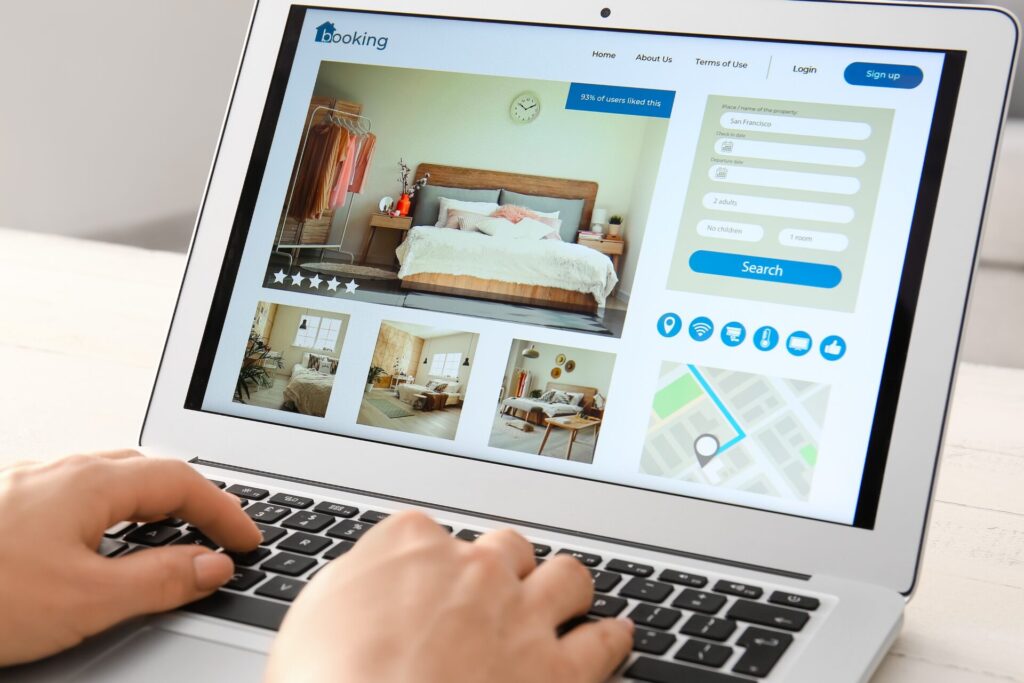
If you’re advertising a specific tour or trip, sending people to your homepage isn’t necessarily the best option.
It’s much better for them to land directly on a page where they see the same offer they saw in the ad – price, included services, departure date and itinerary – with easy access to a booking or enquiry button.
The less effort it takes for a potential customer to reach the action you want, the better.
How will you measure the results?
The last question, but by no means the least important, is “How will we know whether the ad is successful?”

Success is often judged by the number of likes, comments or shares. These can be useful indicators, but they aren’t always the most important ones.
For a tourism business, more meaningful questions include:
- How many enquiries did you receive?
- How many bookings did you generate?
- How much did it cost to attract one potential customer?
- How much revenue did the campaign bring in?
- Which ad or offer performed best?
If you invest a certain amount in advertising but don’t know what you got in return, it’s hard to make the right decision for the following month.
That’s why you should know, before the campaign even starts, what you’re measuring and what success looks like for your business.
An effective campaign isn’t just a combination of good design, compelling copy and an ad budget. It’s the result of a clear sequence:
The right audience → an offer tailored to it → a clear call to action → a suitable landing page → measurable results.
If any of these elements is missing, the ad may not reach its potential, no matter how good it looks.
This is especially important in tourism. In a competitive market where potential guests see dozens of offers for hotels, holidays and experiences every day, it isn’t enough just to be visible. You need to be relevant, convincing and easy to choose.
Before you launch your next Meta campaign, take the time to work through these five questions. They’ll help you not only create a better ad but also understand what you actually want to achieve with it.
And if you want to turn your ad budget into real enquiries and bookings, we can help – from strategy and targeting to ad messaging, campaign management and measuring the results.
Get in touch with us and let’s talk about your tourism business and your next Meta ad campaign.
